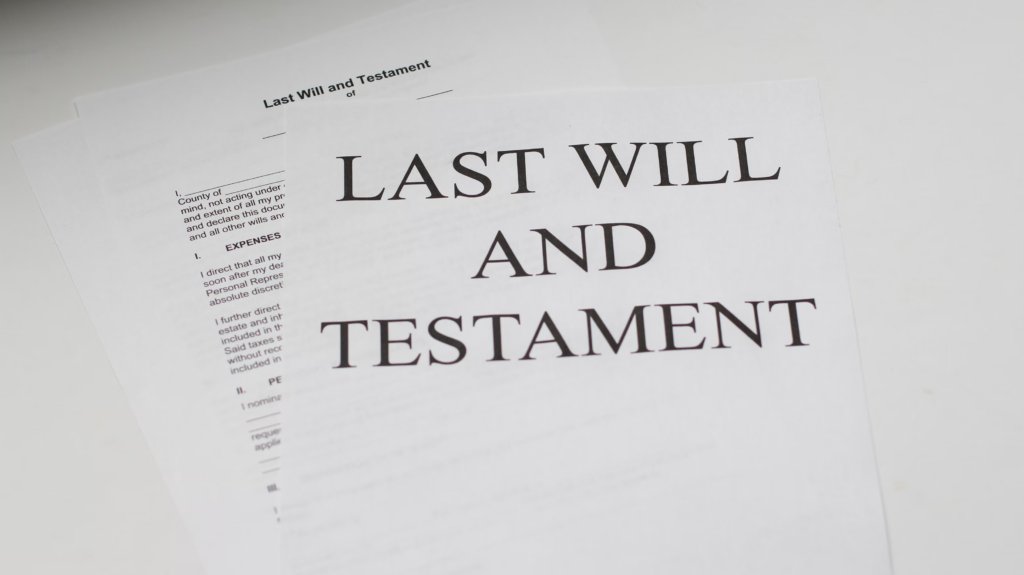
A McLennan County judge will not dismiss the 2003 handwritten will of Texas music legend Billy Joe Shaver, which purportedly leaves his estate to his nephew. The nephew of another country music legend, Willie Nelson, originally made the request to throw out the will. Tommy Witherspoon of KWTX reports the following: The ruling by County […]
What’s the Difference Between an Estate Plan and a Living Trust? If you’re planning for the future of your estate, you may be wondering what the difference is between an estate plan and a living trust. Some people believe they are the same thing. But the truth is they aren’t. There is a significant difference […]
You might think that as long as you have a will, your estate will be distributed the way you want it to be. But if you don’t have a valid will in Texas, your estate will be distributed according to the laws of intestacy. It’s established law in Texas that valid will must be In writing, signed by a testator in person, and signed by at least two witnesses in the presence of the testator who are both over the age of 14. But what does it mean to “sign” a will? A new Texas case holds that simply initialing the will could be good enough to meet the execution requirement.
Legal Terminology: Attested Will
Attested will: requires the signature of the testator and the signature of two or more witnesses who are not beneficiaries of the will.
Probate Law Case
Jones v. Jones (Tex. App.—Houston [1st Dist.] March 29, 2022, no pet. history).
Facts & Procedural History: Holographic (Written or Handwritten) Wills
Decedent’s wife (Beneficiary) filed an application for probate of an attested will, which was contested by Decedent’s son from a previous marriage (Contestant). The trial court denied Testator’s application, declaring that the will lacked Decedent’s signature and that the statements from the witnesses regarding their viewing of the signing could not be correct.
Beneficiary appealed, and the Court of Appeals held that there was sufficient evidence to establish testamentary intent through (1) the presence of his initials on six pages of the will and (2) the statements made by the witnesses. The lack of a signature on the last page alone did not invalidate the will. The Court of Appeals referenced Texas case law suggesting that a signature on a will could be relatively informal (including initials) if testamentary intent was present. This intent could be inferred through the facts and circumstances surrounding the execution of the will.
Main Considerations
What is required for writing a valid will or codicil in Texas?
Except as otherwise provided by law, a valid will must be: (1) In writing; (2) signed by a testator in person; and (3) signed by at least two witnesses in the presence of the testator who are both over the age of 14.
The Takeaway: What Does “Signed” Mean?
Jones v. Jones shows that, as long as there is testamentary intent present, initials may constitute a signature for the purposes of a will.
Do You Need to Hire a Lawyer to Probate a Will In Austin?
Do you need help with a probate matter in Austin-metro area or the surrounding communities? We are experienced probate attorneys who represent clients with sensitive probate matters. If so, please give us a call us at 512-273-7444 or use the contact form to the right (–>) to see how we can help.
A valid Texas will must be: (1) written; (2) signed in person by the testator; and (3) signed by at least two witnesses in the presence of the testator who are both over the age of 14.
Is a handwritten will legal?
A handwritten will is only legal if it meets the requirements of the Texas Estates Code. If the will does not meet these requirements, it may be declared invalid by a court. If any part of a holographic will is not in the handwriting of the testator, or if there is no indication of when it was executed, then it may be declared invalid by a court.
What are the three conditions to make a will valid?
A will must be written and signed by the testator (the person making the will). Under Texas law, a will is not valid unless it was signed at the end of the document by the testator in what is called “testamentary capacity.” To have testamentary capacity, a person must: – understand that they are making a will – know the nature and extent of their property – know who their natural heirs are – understand how distributing their property will affect said heirs.
The will must be signed by two persons who witnessed and signed the will in the presence of the testator. A will can be revoked only if it is done in writing and signed by the testator at the end of the document or after another provision or clause.
If any of these elements are missing, then the court may find that the will is invalid.
What happens if you lost original will?
In general, if you lost your original will, you can execute a new will to replace it. However, when you execute a replacement will, there are a few important rules that you must follow. For more detailed information, please contact our probate attorneys.
How to file a will in Texas?
After a decedent’s will has been filed with the Court the Clerk of the Court should then publish a notice advising all interested parties that the Will has been filed. The notice must remain posted for at least 10 days. This is to give those who wish to contest a will time do so. If no one contests the will, the courts will move forward with confirming its validity.
Funeral Costs & Last Expenses Paying for the Last Expenses Planning the funeral of a loved one can be very stressful. When a person dies, there will be a question as to how and when their funeral and last expenses are to be paid. Even if there is a will, unless the decedent is survived […]
Probate is the process of administering a deceased person’s property and assets in accordance with their estate plan. At times, this can lead to disputes over the ownership and distribution of their assets. The court may be called upon to adjudicate these disputes and determine the rightful owner of property in an estate. In doing […]
An insurance claim file can be attorney-client privileged. The attorney-client privilege is a legal principle that protects communications between attorneys and their clients from being disclosed in court. The insurance claim file is sometimes considered to be part of the attorney-client relationship if it contains confidential information about the case. The following case gives us more information:
Legal Terminology
Writ of Mandamus: an order from a court for a governmental entity to conform to their legal obligations
Jill Mullinax and Charlotte Farley had an automobile accident in 1991. Mullinax had State Farm insurance and was represented by Danny Humphreys and Harlan Holiner, both of whom served as claim adjusters. Farley sued Mullinax, and the case was settled prior to trial. At the same time, while this suit was pending, Farley filed another suit alleging that State Farm Humphreys, and Holiner engaged in bad faith and unfair settlement practices under Article 21.21 of the Texas Insurance Code. In response, State Farm filed a motion for summary judgment (arguing she lacked standing), which was denied.
Regarding this second case, during the discovery period, Farley asked State Farm to produce documents that State Farm declared to be privileged. These documents included the file on the car accident, information on similar claims over a five year period, and Humphreys and Holiner’s personnel files. Farley filed a motion to compel the documents, which State Farm responded to with affidavits with grounds for the exclusion of the documents. After several hearings, the trial court ordered State Farm to produce the claims file, the personnel files, and information about similar claims over the last three years.
The Supreme Court held that (1) State Farm’s affidavits were insufficient, and (2) The trial court abused its discretion in instructing the delivery of the entire claims file (the contents are attorney work product), and that an appeal by State Farm would not sufficiently remedy the situation. The Supreme Court granted State Farm’s motion for leave to file and granted the writ of mandamus conditionally, stating that the writ was only to be issued if the trial court failed to discard its claims file order/didn’t review whether work product privilege needed to be honored.
Main Considerations
What must an insurance company seeking to exclude documents based on immunity or confidentiality do?
They must specifically plead immunity and provide evidence, such as affidavits or live testimony, that supports the claim. An affidavit which does not positively and unqualifiedly represent the facts as disclosed in the affidavit to be true and within the affiant’s personal knowledge is legally insufficient.
Why might the documents in the insurance broker claim file be subject to attorney work product privilege?
They likely contained the attorney’s mental processes, conclusions or legal theories related to their pretrial preparation.
The Takeaway
Humphreys v. Caldwell shows that evidence conveying information that likely involves attorney-client privilege is subjected to higher scrutiny, and that the exclusion of such evidence requires sufficient support.
Do you Need to Hire an Experienced Probate Attorney in Austin?
Do you need help with a probate matter in Austin-metro area or the surrounding communities? We are experienced probate attorneys who represent clients with sensitive probate matters. If so, please give us a call us at 512-982-9293 or use the contact form on the right to see how we can help. –>
Are communications between insurer and insured privileged?
In the world of insurance, there is a lot of back and forth between insurer and insured. But what happens when that communication is privileged? Can an insurance claim file be attorney-client privileged? When an insurance claim involves an attorney, that claim may be considered privileged.
Are insurance claim notes privileged?
Any material that is subject to attorney-client privilege will be marked explicitly in the file. Any material that is subject to attorney-client privilege is usually marked as “Attorney Client Privileged.”
Is an insurance policy confidential?
Most insurance policies contain a confidentiality clause that protects the insurer’s trade secrets. However, this does not mean that the information in an insurance claim file is automatically attorney-client privileged.
Is an insurance policy confidential?
No, an insurance policy is not considered confidential. However, an insurance claim file may be attorney-client privileged if it contains attorney work product.
What are the elements of the attorney-client privilege?
The attorney-client privilege is one of the oldest and most well-recognized privileges in the law. It is based on the principle that communications between lawyers and their clients should be confidential. The attorney-client privilege protects communications between lawyers and their clients from being disclosed without the client’s consent.
Are communications with insurance company privileged?
Some states consider communications between insurance firms and their policyholders privileged, which means they are not subject to discovery in a lawsuit. In other words, if you’re involved in a car accident, your insurance company can’t be forced to turn over emails or letters that you sent them.
After a loved one dies, their property must go through probate court in order to be transferred to the rightful heirs. If you are named as the executor in the will, you will be responsible for ensuring that the process goes smoothly. Here’s what you need to know about transferring a case to probate court. […]
A probate court is a court of limited jurisdiction that has jurisdiction over the probate of wills and the administration of estates in Texas. Probate courts are usually operated at the county level, although there are a few county-level courts that operate independently of the regular probate courts. How do you know how to pick […]
When a person dies, his or her estate is the collection of the person’s assets at the time of death. The estate is managed by an executor, who is responsible for paying any debts and taxes owed by the deceased, as well as distributing the remaining assets according to the will. If you are the executor or administrator of an estate, you are responsible for preserving the estate’s assets until they are distributed to the beneficiaries. There are several steps you can take to preserve the estate’s assets. The key to preserving a decedent’s estate is to ensure that only the appropriate person has the ability to access assets.
Who Can Secure Property? Beneficiary Interest
After someone has died, loved ones have to figure out what to do with their belongings. This can present a number of challenges.
Texas law generally says that an interested person can act to secure or preserve property. For example, if you have a claim against the property and it is in danger of being lost, you may be able to act to protect your interest in the property. But doing so can also subject the person who does so to civil and possibly criminal liability. Where is the line between securing property and doing something that is illegal? The law is not all that clear.
It is generally recommended that items of value be documented, and precautions taken. This includes bringing witnesses with you, having police supervision during the proceedings, taking photographic evidence etc. The more information that is documented, the better.
An application for emergency intervention or a temporary probate administration may be needed to secure the decedent’s property. An emergency intervention attorney can help with this situation to secure property.
How to Secure Probate Property in Texas
Methods of securing property depend on the type of property. For real estate, contact a mortgage holder, tenant or other interested party to ensure it will be secured. It may include changing the locks as well. Cash and/or checking account can be secured by transferring them to an account owned by the estate.
There are other property that can be more difficult to secure, such as operating businesses and digital assets, such as cryptocurrencies. Cryptocurrencies are digital assets that are used to send value between accounts.
Property located outside of Texas presents unique challenges. Some of these will be addressed later in this guide, but it is worth noting that the law of another state may need to come into play. This means filing ancillary probate in the other state, which can get complicated and expensive.
When property cannot be secured, it may be necessary to consider a temporary administration. A temporary administration is a court application that is typically used only when other options have been exhausted. In this case, it’s usually a good idea to get a probate attorney involved.
Do you Need to Hire an Experienced Probate Attorney in Austin?
Do you need help with a probate matter in Austin-metro area or the surrounding communities? We are experienced probate attorneys who represent clients with sensitive probate matters. If so, please give us a call us at 512-273-7444 or use the contact form on our homepage to see how we can help.
The estate of a deceased person means all the assets that they own. After someone dies, there is a period in which their assets are managed by an executor or administrator and distributed to the people named in their will or living trust.
How do you preserve an estate?
The executor or administrator of an estate is responsible for preserving the estate’s assets until they are distributed to the beneficiaries. There are several steps that the executor can take to preserve those assets.
Who shares the property of the deceased?
If a person dies without leaving a will, the law of the state where he or she lived at the time of death will control the distribution of his or her property. Each state has a set of laws that govern how a person’s property must be distributed when he or she dies without a will. These laws are called “intestate succession” laws. A state’s intestate succession laws will govern the distribution of an individual’s property when he or she dies without a will.
What is probate?
The probate process is the process of settling a decedent’s estate after death. This process includes gathering the decedent’s assets, paying the decedent’s debts and taxes, and distributing the remaining assets to the beneficiaries.
What is an estate?
The value of an estate is the net value of all the property of a person who has died. The gross value of an estate is the total value of all the property of a person who has died. Appraisers use the gross estate value to determine the cost of selling everything and dividing the proceeds among those who inherit.